Life of a Trainer, Facilitator and Coach (Survey)

“Life can only be understood backwards; but it must be lived forwards.” – Soren Kierkegaard

Last year I did a survey (for fun) to get some inputs from my friends who are in the professional development industry. Their experience as a trainer, facilitator and coach / mentor are ranging from two -(2) to twenty five -(25) years. I have a lot of respect for them and I am glad that they are my friends. Thank you for all your inputs… you know who you are!!

At times, I received some questions on how to be a trainer or coach and I look forward to this sharing to answer some of that questions that one has pertaining to this industry. Well, you can always invite my friends or me for coffee to discuss or brainstorm further…

Without further delay, please find outcome of the survey…

(1) Why are you doing this?

  • To leave a legacy behind that I have touched and transformed people positively worldwide.
  • As a Coach I can support young people to find their life purpose and develop their competency to success in VUCA World.
  • I love doing this because my passion is to impart knowledge in the most simple, engaging and connected manner.
  • Doable Business
  • My passion and helping people
  • Passion
  • Self-satisfaction, Giving Back to Society
  • Is something I am passionate about and a journey of learning for both.
  • Out of passion
  • To inspire people to do their best to strive
  • it fulfills my passion of helping people think better

As for me, my life purpose is “To inspire and develop leaders to reach their highest potential, for God.”

(2) What is the most memorable experience in training or coaching? (feel free to share more than one)

  • After more than 15 years people still remember on the impact I created in their life
    When people say that I make them feel great about themselves
    When people say that they become better because of my teachings
  • I helped an entrepreneur of a construction company to turnaround his business by just developing the leader inside him (learn how to lead self, influence people, listen more and treat employees the way they want by learning their love languages). And this is a volunteer project for SME community.
  • When your participants give you a round of applause not only at the end of the training (usually 2 days) but at the end of the first day! Nothing beats that feeling of satisfaction.
  • The feeling of HIGH @ the end of program
  • When participants/clients change for the positive, and appreciative of our coaching/training
  • Seeing lives transformed for the better
  • Your participants remembering you , when it has slipped your memory
  • When I know I have made some difference in the organization striving for betterment
  • I remember the first time my participant told me that it made his life better, at work and with his family… the joy I had to continue my journey as a trainer/coach/sharing/mentor was a breeze.
  • 1. The person coached performed outstandingly and received a double promotion.
    2. The whole branch performance turned around from red to black within 3 months when the HQ management gave them 1 year.
    3. 14 bank branches increased sales in all their identified weak portfolios in less than 2 quarters with a minimum increase of 25%. The list goes on……..
  • Participant remembered what you taught them and applied practically in life and workplace
  • When I got feedback from a participant how she applied the insights and also share the insights with her colleagues who also benefited from the learning

As for me, all of the above and more, when you know are able to make a difference in lives… every session is different and not everyone in that session will apply what they learned. I am just looking for one person, one life to inspire… I trust there will be one every time!

(3) What is your favourite quote?

  • Choose to Lead, once a while learn to follow
  • “Live a life you want. Do not care too much on how people think about you”~ my quote:)”
  • “Discipline is the bridge between goals and accomplishment” Jim Rohn
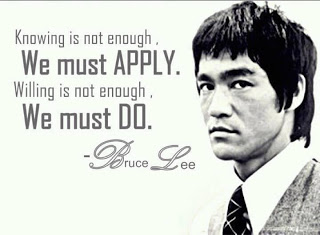
  • Knowing is not doing
  • For things to change for you, you have to change first yourself.
  • The purpose of life is to live a life of purpose.
  • “We are all learners, and that is the way to grow positively”.
  • Too many to recall. 8 truth of life by Abdul Kalam is a good guide for me
  • All that is not given, is lost!
  • Follow Your Passions And Success Will Follow
  • The purpose of the body is to carry the brain

My favourite quote will be the quote I share with everybody… “Your habits, your future!”

(4) Who are your role models?

  • Jesus Christ, MGR, Konosuke Matsushita, My Parents, My wife
  • Jeff Bezos; Warren Buffet; Steve Jobs
  • Barrack Obama – His Leadership Traits Anyone with patience and perseverance
  • Myself
  • Mother Theresa, Mahatma Gandhi, Martin Luther King, Jack Ma
  • Jack Canfield, John Maxwell, Robin Sharma, Marshall Goldsmith, Dr Peter Chee and others.
  • My First Head of Department (1977)
  • My prophet
  • I am my own
  • Tony Robbins
  • My parents

I have many role models, Jesus Christ, my parents, my mentors, coaches, my wife and even my kids… I am really learning from them!

(5) What are the titles of your favourite books?

  • How to win friends and influence people
    How to stop worrying and start living
    Think and Grow Rich
  • Coaching & Mentoring for Breakthrough Success; Value Investment; The Power of Think Difference; Sapiens.
  • The 7 Habits of Highly Effective People – Stephen Covey
    How Successful People Think: Change Your Thinking, Change Your Life – John Maxwell
  • Purpose Driven Life
  • Simplify, The Power of Habits, 7 Habits of Highly Effective People, Mindset…etc
  • Too many to recall….To Kill A Mocking Bird . My Family & Other Animals.
  • Quran
    A balance life Nutrition immunology by Dr Chen
    Art of war
  • You’ll See It When You Believe It.
  • Change your habit Change your world
  • Mindset, Start with Why, Leaders Eat Last, Rewire

Mine will be… easy… all of the above, haha!

(6) Any advice or tips for one who wants to start as a trainer or coach?

  • Pursue excellence in training by being a role model
  • You must love what you do and do what you love.
  • Be genuinely passionate about everything you do… and you will see the miracle happen.
  • Be transparent and creative
  • If you aren’t passionate enough, and wanting to be a coach or trainer because you see/admire/envy others having the income or the lifestyle, then don’t do it. You must have the love for people in order for you to go far in this industry. Also, it starts from yourself. You need to keep learning, improving and change. Role modeling and walking the talk is very important.
  • Educate yourself first.Open Minded, Live Long Learning
  • Match it with your passion. Training can be in many areas
  • Have a whole lot of passion.
    Love what you do and do what you love!
  • Doing what you are passionate about is more important
  • Know what you want to focus and excel in and why you want to do it

If you do it as your work, it will be tedious… if it’s play… everyday is a fun day!

“Difficult and meaningful will always bring more satisfaction than easy and meaningless.” – Maxime Lagacé

“Your habits, your future!”

Communication habits

“Communication is the response you get…”

The quote is one of the NLP presuppositions that I have learnt from my certification program. Yes, we communicate everyday and we get all sorts of responses as well.

Another favourite of mine is…

“You cannot NOT communicate!”

During my training workshops, I will ask the participants (especially to those who are married)… “what will happen if you do not communicate with your spouse for a week?”

Most of them will answer… “you will sleep outdoor…” “that’s the end of you…” haha all interesting answers.

In this blog, I would like to share some good communication practices and habits.

Please feel free to share your thoughts as I believe I am still learning and we are in this learning journey together.

Here it goes…

  • being congruent

How are you being consistent with your words, the way you say it and body language? Are you in harmony with your intention and action?

Trust is congruence between what you say and what you do. – Peter Drucker

  • Attunement

When communicate with others, how aware are you with their responses? How is the receiver learning? What method will be effective for them to learn faster? Visual, Auditory or Kinaesthetic?

We each have a sixth sense that is attuned to the oneness dimension in life, providing a means for us to guide our lives in accord with our ideas. – Henry Reed

  • Listening

How are you listening?

We can learn from the late Stephen Covey… “listening with the intent to understand…

it will be challenging to listen effectively when you have filters. We start judging and jumping into conclusion… definitely not helping us nor achieving good rapport with the speaker.

Awareness and mindfulness to perfect practice empathy… listening to emotions in the tone and physiology… may not be easy at first, it requires a lot of conscious effort plus practices to make it into a good habit.

Empathy and social skills are social intelligence, the interpersonal part of emotional intelligence. That’s why they look alike. – Daniel Goleman

  • 5 second rule

Happened to come across this learning from the book… “To sell is human” by Daniel Pink. A good book to read for leaders. https://www.amazon.com/dp/1594631905/ref=cm_sw_r_cp_awdb_t1_alMrDbZZH9BHC

In summary, let’s wait for 5 seconds to ensure that others have finished with what they have to say… then we can reply. Pause and silent is one of the powerful tools in communication.

Silence is one of the great arts of conversation. – Marcus Tullius Cicero

  • Ask one question at a time

Our brains works fast and we may have lots to say or ask… to be effective, learn to focus on one question at a time. Let the receiver understand and internalise what you are asking, let them have the opportunity to answer with better comprehension of your question.

Avoid asking “nested questions”… question within a question or too many questions at one go…

The successful warrior is the average man, with laser-like focus. – Bruce Lee

  • It’s the manner not the matter

Communication is how we deliver the message not only the message nor it’s meaning.

Even if it’s not so good news delivered in a right manner, trumps good news delivered inappropriately…

Better good manners than good looks. – Proverb

  • Avoiding sarcasm nor assumptions

Usage of words and how you say them is important. What I’ve learnt when providing feedback and not to sound sarcastic nor implying that the receiver is at fault… usage of “I” rather than “you” will be recommended. “You” sounded more like placing the person as the attention of the conversation and may cause them to feel at fault.

Ask questions, don’t make assumptions. – Angela Ahrendts

  • Begin and end with positive

Imagine when you start on a journey with positive… a good start and everything will be better… the feeling will be great too. Then finishing off with positive as well… WOW! I don’t know about you, for me… that is truly recommended and ideal in any situation (most of the time…).

Let’s do our best to start and end with positive. People will be more appreciative and should we be consistent with that practice, it becomes our brand as a positive communicator.

Communication – the human connection – is the key to personal and career success. – Paul J Meyer

Feel free to experiment the sharing above and let me know how it goes… looking forward to your success!

“Your habits, your future!”

Thinking habits

Today is kind of special as it’s my first time using the WordPress app to write this blog… enjoy reading!

“The secret of living a life of excellence is merely a matter of thinking thoughts of excellence. Really, it’s a matter of programming our minds with the kind of information that will set us free.” – Charles R. Swindoll

We are constantly thinking and some of us are overthinking. My mentor used to tell me… “Dion, overthinking kills!”

Truthfully, till today, I am still thinking and I’m not asking anyone to stop thinking… just be mindful and practice Awareness on what are we thinking of?

What thoughts do you have in mind? More of positives or negatives? What’s the pattern? Being aware is the key to start changing.

For some of us, we are concern about how others are thinking of us… frankly speaking I believe people are only interested in themselves. So do not worry too much on how people think of you as they are busy thinking of themselves!

Thinking can help us to decide on what’s Important versus urgent. Guiding us to prioritise our activities and helping us to achieve our goals.

“Positive thinking is a valuable tool that can help you overcome obstacles, deal with pain, and reach new goals.” – Amy Morin

After reading some articles on thinking habits, I would like to share some key learning points I have gotten on good practices. Here we go…

1. Awareness about our thinking

First things first… Awareness before change as whatever we think and feel affects our attitude leading to our action and behaviour making our habits… if there is a pattern you realise that is not helping you, time to change.

2. Decide to have open mind to learning continuously.

Expand our understanding… find new topics and things to learn. Invest some minutes leading to hours to learning new things, reading value adding articles / books… there are endless learning tools out there, just have to start learning… pick one that you can start with.

3. Think agility, be flexible

There is a need to avoid being judgemental, accept different perspectives and viewpoints… be neutral and listen first… consider new ideas… then gauge whether they are align with your values. Flexibility trumps rigidity!

4. Humour helps

Humour is a good catalyst to positive emotions and vast thoughts… being too serious and over-thinking will affect our creativity. Humour helps us to be more productive and contributes to stress management. How can you start being humourous?

5. Empathy… Seek to understand

We need to practice more empathy… connecting and relating to others via listening. Listen with the intent to understand (as the late Stephen Covey mentioned). It is a skill that needs to be developed and done deliberately at first. And one day… it will be automatic.

6. No right, no wrong…

If you think it’s right, you are right… if you think it’s wrong, you are right!

When you read an article, the writer is just expressing via his/her own understanding, knowledge, experience and views… if needed, do your own research. If you do not agree, learn to voice your opinion and decide your own stand.

7. Imagination is more powerful than knowledge

Like Albert Einstein, we need to start dreaming, fantasising and think about the possibilities… keep visualising and be flowing with creative juice… do not let the dream stealers rob you of your greatest ability to imagine…

8. Be amazed and appreciate life which if full of wonderment

Discover and go with your passion. What are the things that make you feel amazing? Be in the moment to feel good creating memories. Today only comes once in your lifetime.

9. Risk if you need to…

Like what we have been exposed to the phrase… “no risk, no gain…”

Anyway, everyone’s risk appetite is different. To grow, you need to venture out of your comfort zone… unknown territory and not sure what you are going to get yourself into… whatever it is, it may not have to be a gamble. Set SMART goals that are meaningful to yourself and stretch your own limit. Great if you can think big and have a responsible plan to achieve the goals! And if you can find people who can help to support you… that’s a bonus!

10. Focus

There are so many distractions in our lives today. How can we learn to be more focused? We can start by praying or meditating, anyway that works for you. We as humans can only do what we can do… the rest will be up to God! What is stopping you from this thinking that you are not able to change? Take action to make it your habit!

I have this believe that someone has done it before… it’s a matter of how we can reach out to that someone and learn for him/her.

“There is nothing either good or bad but thinking makes it so.– William Shakespeare

“Your habits, your future!”

Eating Habits

“One cannot think well, love well and sleep well if one has not dined well.”
Virginia Woolf

This topic will resonate with most people. Do we eat to live or live to eat?

Image result for eating meme

How can we maintain a healthy lifestyle through eating? As a person who loves to eat myself, I find it hard to resist good food and especially when there is great company to eat with… I tend to eat more. Therefore, I have been thinking about whether to write on this topic or not?

There are a lot of areas to discuss when it comes to this topic on eating… this time I will focus on eating healthy as part of our daily habits and if you have any ideas, please do share and write to me, thank you.

Image result for healthy eating meme

“The chief pleasure in eating does not consist in costly seasoning, or exquisite flavor, but in yourself.”
– Horace

I believe when it comes to eating, it boils down to making choices. It is definitely not easy as our emotions will be stronger than logic. We know we have to eat healthier food options, just that at times, the craving for not so healthy options will take over and we gave it to the craving. Then regretted for that action… who have not experienced that before?

Please find some sharing on how we can be more aware and to have better plus healthier options when it comes to eating…

It starts with WHY?

What is your compelling reason for eating healthy? Why do you want to eat healthy? First things first, it starts from within us. Who are you and what identity do you want have to embark in this journey of healthy eating?

How can it be done?

Everyone is unique and requires different calorie count per day (to lose or maintain weight). That means, you will need to do some research on your own lifestyle; what will your daily activities be and how much energy do you need to get through your day? How are you keeping track on the food that you are going to eat? What is your plan when it comes to your meals? How about rituals (drinking water, eating fruits before meals, etc.) and supplements (vitamins and minerals)? If you are cooking, how do you plan your menu… weekdays, weekends… special days.

What are some of the TIPS?

  • Research on the types of food that is good for you
  • Eat lots of vegetables (leafy ones) and fruits (I believe everything in moderation… haha)
  • Eat more fish (brain food), of course fresh ones, oily ones (salmon, sardines, mackerel) and not so oily ones (tuna and local fishes)
  • Cut down on sugar and salt intake (processed and non-processed ones as well) and especially processed food – biscuits, cakes, sausages, canned food, fizzy drinks, pastries, cereals
  • Eat whole and fresh produce / food
  • Get properly hydrated… drink that H2O and not get thirsty; water is a better option than sugary drinks even fruit juices!
  • Have proper meals and not get hungry, snack healthily when necessary (as when we get hungry, we tend to over eat…)
  • Check the nutrition label, learn how to read them
  • Eat mindfully and be aware of what you put into your mouth (this is also a self reminder to me…)
  • Just be flexible with yourself… at times we need to indulge and when we do… do it responsibly and mindfully…

Anyone who has just started will feel the difficulty to sustain as it is not going to be easy in the beginning. As what Jack Ma of Alibaba said…

Image result for jack ma on messy in the beginning

“Never give up. Today is hard, tomorrow will be worse, but the day after tomorrow will be sunshine.”

Let’s all start today and be rewarded tomorrow.

“Your habits, your future!”

“Reboot” and “Refresh” Habits

“Rest when you’re weary. Refresh and renew yourself, your body, your mind, your spirit. Then get back to work.” – Ralph Marston

What do we do when we are tired? I am sure most of us have experienced this before. This has triggered me to share some good habits with you. Feel free to practice them and let me know how it goes.

Image result for reboot meme

“Every now and then go away, have a little relaxation, for when you come back to your work your judgment will be surer. Go some distance away because then the work appears smaller and more of it can be taken in at a glance and a lack of harmony and proportion is more readily seen.” – Leonardo da Vinci


Image result for tips meme

Here are some of the good habits:

  1. “Solvitur ambulando” is a Latin phrase which means “it is solved by walking”. When we feel tired, it could be due to a few factors; we are bored, ran out of ideas or could be lack of oxygen. By breaking what we are doing at that moment to go for a walk, we can reboot, refresh and re-energize. One of the brilliant articles to read: https://www.huffpost.com/entry/hemingway-thoreau-jeffers_b_3837002
  2. Drink water is a healthy and good way to increase our brain capacity feeding it with oxygen and transporting nutrients to parts of our body. At times when I was too focused in completing my tasks, I forgot to drink water then I felt lethargic, not able to focus and leading to headache. Water does not only hydrate us, it contributes to many health benefits. (all right, take a break and have some water, now…)
  3. Aromatherapy has psychological and physiological effects on us. With the right essential oil (I believe it depends on individual, the one they use in the office… is not to my liking, I prefer lemon or something zesty), it will help to boost our mood, helps with stress reduction, calming us and assist in triggering sense of focus. There are many options that are available or the easiest is to rub the essential on your palm and enjoy the scent.
  4. Snack healthily with nuts, dried fruits, fruit or vegetable slices, peanut butter, etc… here is one of a good resources: http://www.eatingwell.com/article/15314/10-ways-to-snack-smarter/
  5. Power nap... in fact, I just woke up from my power nap and writing this blog, haha. There are a lot of “different schools” of thoughts on this topic… according to science, generally the range of duration will be from 10 to 30 minutes. As long as you do not go into “sleep inertia”, when that happened, you will wake up feeling worse. How long for you? Please experiment.
  6. Stretching or quick exercise i.e. jumping jacks, walking around, planks… there are so many exercise we can do. Find the one that you are able to do with the space constraint and with the resources that you have (chair or table).
    This site is interesting:  https://draxe.com/exercise-to-do-at-your-desk/
  7. Have short breaks in between tasks; pause, look around (focus exercise), meditate, mindfulness (awareness), puzzles, read articles, talk and socialize, breathing exercise, doodling… make coffee or tea and enjoy sipping. Take a break, have a Kit Kat (not that I am getting any sponsorship from them :-p )
  8. Most important of all, should we want to stay energize, focus, refresh and healthy… have enough rest and sleep. How many hours? Different people will be different. You will need to experiment and take note of whether your sleep is a good light or deep sleep. For me, I will need at least 7 hours of sleep to be performing my best.


“Take care of your body. It’s the only place you have to live.” – Jim Rohn


“Your habits, your future!”


8 Steps to Successful Change

One of the books that I enjoyed reading, a fable-based book and great learning as well.

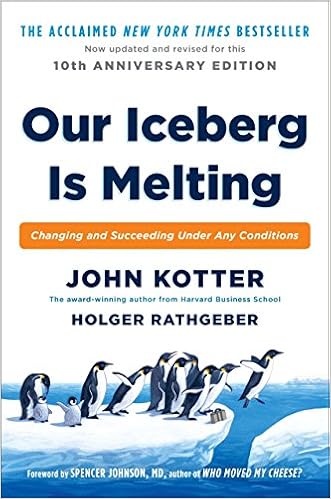
The book titled “Our Iceberg is Melting – Changing and Succeeding Under Any Conditions” by John Kotter and Holger Rathgeber. The book is available at Amazon.com…

The synopsis from Amazon:

Our Iceberg Is Melting is a simple story about doing well under the stress and uncertainty of rapid change. Based on the award-winning work of Harvard Business School’s John Kotter, it can help you and your colleagues thrive during tough times.

On an iceberg near the coast of Antarctica, group of beautiful emperor pen­guins live as they have for many years. Then one curious bird discovers a potentially devastating problem threatening their home—and almost no one listens to him.

The characters in the story—Fred, Alice, Louis, Buddy, the Professor, and NoNo—are like people you probably recognize in your own organization, including yourself. Their tale is one of resistance to change and heroic action, seemingly intractable obstacles and clever tactics for dealing with those obstacles. The penguins offer an inspiring model as we all struggle to adapt to new circumstances.

Our Iceberg Is Melting is based on John Kotter’s pioneer­ing research into the eight steps that can produce needed change in any sort of group. After finishing the story, you’ll have a powerful framework for influencing your own team, no matter how big or small.

gray concrete block

I believe different people will learn differently from the book. Depending on the different states we are in, at the time reading the book.

As for me, I have gathered good tips in practicing a successful change. In my own understanding (adapted from the book), the steps are shared as below:

Making it Possible

  • Identify a trigger to make it urgent and important; what needs to be changed immediately?
  • Setup a support team (inner circle); the power of group with the ability to lead, communicate, good branding, skills to analyse, decisive, proactive and focus on priorities.

Make a decision

  • Decide on the well formed outcome; with the right vision, goals, strategies and tactics. Journey to making a reality for yourself.

Massive Actions

  • Understand what is needed and the price to pay for embarking on the change project…
  • Overcome and remove the barriers stopping or slowing you down.
  • Go for low hanging fruits and get results as soon as possible in the short term.
  • Be aware of initial success and keep going (do not be distracted). Do it until you get the desired results…

Sustainability

  • Make it a habit culture… keep repeating the right action to produce the desired results (repeatedly).

Rest if you must… keep going and you will achieve the results that you want.

“Your habits, your future!”


12 Weekend Habits of Highly Successful People

Have you ever thought of what successful (depends on what success means to you, in this case, people who are busy and had made a name for themselves in the business world) or we can identify them as effective leaders (people who get results)  do during the weekends?

I have come across these twelve leaders and what they do during weekends;

1. Robert Iger (CEO of Disney) – get up early (and never experience “Monday Blues”…)

2. Benjamin Franklin (Founding Father of the United States) – have a plan (fail to plan and we plan to fail)

3. Timothy Ferriss (Author; one of his books, “The 4-Hour Work Week”) –  do not multitask (focus to get better results)

4. Anna Wintour, OBE (Vogue’s Editor-in-Chief) – stay active (and gain more energy to achieve more)

5. Steve Jobs (Apple) – prioritize what’s important (clarity on what gets you closer to your goal and breakthrough)

6. Warren Buffett (CEO of Berkshire Hathaway) – make time for hobbies (life has more meaning in doing what you love)

7. Oprah Winfrey (Media Proprietor) – practice stillness (meditation for 20 minutes a day will improve your mind)

8. Randi Zuckerberg (Businesswoman) – forget FOMO (Fear of Missing Out) and embrace JOMO (Joy of Missing Out) 

9. Bill Gates (Microsoft) – take time to reflect (this is how humans improve themselves and learn more)

10. Richard Branson (Business magnate) – give back (release oxytocin and feel happier)

11. Jack Dorsey (CEO of Twitter Inc.) – get ready for the rest of the week (plan ahead and expect the unexpected)

12. Jay-Z (Rapper) – keep up the momentum (once you get going, it’s going to be tough to stop… keep moving forward)

There you go… some great tips and sharing on what we can do with our weekends. Enjoy your weekend.

“Change Your HABITS, Change Your World…”